Does AirAsia Check Onward Tickets for Thailand Flights?
The question comes up constantly in travel forums, Facebook groups, and Reddit threads dedicated to Southeast Asia travel: does AirAsia actually check for an onward ticket when you're flying into Thailand?
The short answer is yes — but the longer answer matters more, because enforcement isn't uniform, the consequences of getting it wrong are real, and knowing exactly how AirAsia handles this can save you from a very stressful morning at the check-in counter.
Here's what actually happens, based on how AirAsia's check-in system works, which routes see the most enforcement, and what to do if you're flying soon on a one-way ticket.
Why AirAsia Cares About Your Onward Ticket
AirAsia is not checking your onward travel out of curiosity. The reason is financial.
Under IATA carrier liability rules, if an airline transports a passenger who is subsequently denied entry at the destination, the carrier is legally responsible for flying that passenger back at its own cost. For a budget airline operating on thin margins — AirAsia's average fare on intra-Asia routes is often under $80 — that liability can represent several times the ticket price.
AirAsia uses Timatic, the global travel documentation database maintained by IATA, to verify entry requirements at check-in. When an agent pulls up a booking for a Thailand-bound flight, the system flags whether the passenger's nationality requires proof of onward travel. For many passport holders, particularly those entering Thailand on a visa exemption, the flag is active.
Thailand allows most nationalities to enter visa-free for 30 or 60 days depending on the bilateral agreement — but the condition of that entry is that you have a confirmed plan to leave before the exemption expires. AirAsia knows this, and their check-in protocol reflects it.
Which AirAsia Routes Into Thailand See the Most Enforcement
Not every AirAsia flight into Thailand carries the same level of scrutiny. The routes where travelers most consistently report being asked for onward documentation are:
Kuala Lumpur (KUL) to Bangkok (DMK/BKK) — this is AirAsia's highest-volume Thai route and where enforcement is most systematic. The check-in staff at KLIA2 are experienced with the policy and apply it routinely. Travelers flying this route on one-way tickets should expect to be asked.
Singapore (SIN) to Bangkok — operated by AirAsia X and Thai AirAsia X on various configurations. Singapore's Changi Airport check-in staff are generally thorough on documentation requirements, and this route sees consistent enforcement.
Kuala Lumpur to Chiang Mai and Phuket — both destinations see similar enforcement to the Bangkok routes, though slightly less frequently reported in traveler accounts.
Other regional routes — AirAsia connects Thailand to dozens of cities across Southeast Asia, India, and beyond. Enforcement on less-trafficked routes is more variable, but the policy applies across the network.
The pattern is straightforward: the busier the route and the more experienced the check-in staff, the more consistent the enforcement.
What Happens at the AirAsia Check-In Counter
The typical scenario unfolds quickly. You approach the counter or kiosk, scan your boarding pass or present your booking, and the agent reviews your passport. If you're on a one-way ticket to Thailand and your nationality requires onward travel documentation, the agent asks for it.
If you produce it immediately — a return flight booking, an onward flight to another country, or a verifiable temporary reservation — the interaction ends in under a minute. The agent notes the documentation, issues your boarding pass, and you move on.
If you can't produce it, the agent explains that they can't issue your boarding pass without proof of onward travel. They'll typically tell you what's needed and, if there's time before check-in closes, give you a window to sort it out. AirAsia's check-in counters generally close 60 minutes before departure for international flights. That's your working window.
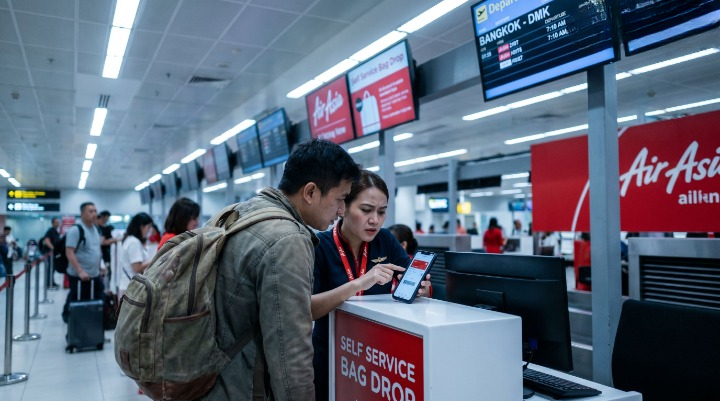
One thing worth knowing about AirAsia specifically: the airline has invested heavily in self-check-in kiosks and the AirAsia app for mobile check-in. Some travelers assume that completing mobile check-in means they've cleared all documentation requirements. They haven't. Document verification happens at the bag drop counter even for mobile check-in passengers, and that's where onward travel proof gets checked.
AirAsia's Online Check-In and the Documentation Gap
This catches travelers off guard more than almost anything else on AirAsia flights.
You complete check-in on the app the night before. You get your boarding pass on your phone. You arrive at the airport feeling prepared, go straight to bag drop, and the agent asks for your onward documentation. Your phone boarding pass doesn't change the documentation requirement — it just means you completed one step of the process.
The bag drop agent has the same authority to hold your boarding pass as a traditional check-in agent. If you don't have onward travel proof at that point, you're in the same position as someone who hasn't checked in at all — except now you may have less time to fix it.
If you're flying AirAsia to Thailand on a one-way ticket, sort your onward documentation before you leave for the airport, not at the counter.
Thailand's Entry Requirements — What AirAsia Is Actually Checking Against
Understanding what AirAsia is verifying helps clarify why the requirement exists and when it applies to you.
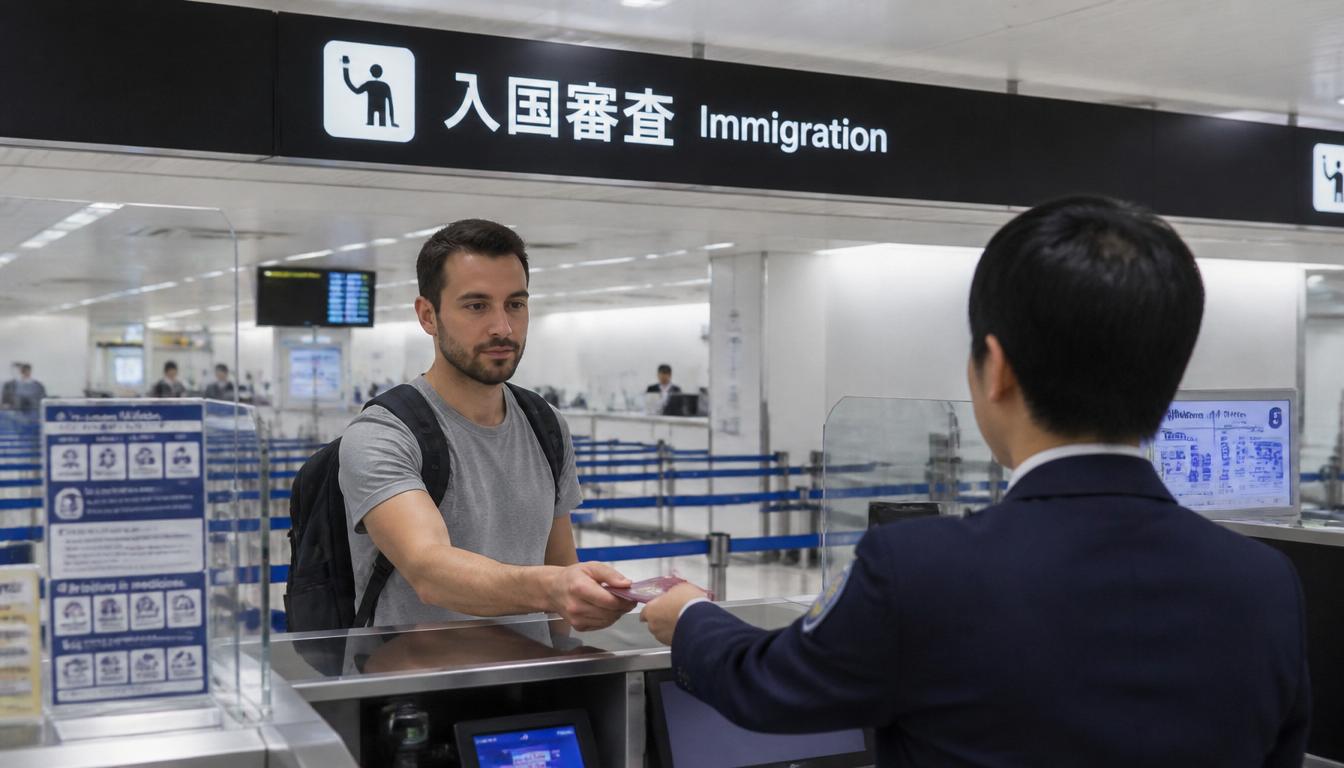
Thailand's immigration rules require tourists entering on a visa exemption to have a confirmed onward or return travel booking. The official position is that you should be able to demonstrate you'll leave before your permitted stay expires. In practice, Thai immigration officers at Suvarnabhumi and Don Mueang vary considerably in how thoroughly they enforce this at the border — some ask, many don't. But AirAsia enforces it before you board, which is what actually matters for whether you get on the plane.
The requirement applies most commonly to:
Travelers entering on a visa exemption (which covers most Western, East Asian, and many Southeast Asian passport holders for 30 or 60 days). Travelers on tourist visas obtained from a Thai consulate are less likely to be asked, since the visa itself demonstrates a more formal entry process.
Travelers making repeated entries to Thailand — if your passport shows multiple recent Thailand stamps, both AirAsia staff and Thai immigration officers may look more carefully at your onward documentation.
Long-stay travelers — if you're planning to stay close to the full exemption period, having clear documentation of your exit matters more than if you're staying a few days.
What Counts as Valid Proof for AirAsia
AirAsia's check-in staff are looking for a confirmed booking that shows you have a plan to leave Thailand. The documentation options are the same as those accepted by Thai immigration:
A return flight to your origin country or any other destination is the cleanest option. A booking confirmation with your name, flight number, dates, and a reference number is sufficient. You don't need a paper ticket — a PDF or screenshot of the confirmation on your phone works.
An onward flight to a third country works equally well. Flying Bangkok to Bali, Bangkok to Vietnam, or Bangkok to anywhere else with a confirmed booking satisfies the requirement. The destination doesn't matter; what matters is that you have a confirmed departure from Thailand.
A verifiable temporary flight reservation — one with a real PNR in the airline's reservation system — passes AirAsia's verification because it exists in the same database that any airline can query. The agent enters the PNR, the system returns a confirmed booking under your name, and in most cases the requirement is satisfied. AirAsia's verification process is database-driven — what the screen shows is what the agent acts on. As with all airline and immigration interactions, the final call belongs to the staff member in front of you, but a verifiable reservation with a live PNR gives you the strongest possible documentation for that moment. This is why how a verifiable reservation works matters — a screenshot PDF without a queryable PNR fails the check even if it looks identical to a real booking.
Bus or train tickets crossing into a neighboring country — such as a bus from Bangkok to Kuala Lumpur or a train to Penang — are technically valid but less reliable at AirAsia check-in counters. Agents may not be familiar with overland transport bookings, and some will push back. A flight reservation is the safest documentation for check-in purposes.
The Routes Where AirAsia Doesn't Always Ask
There's an honest reality here: enforcement is inconsistent. Some AirAsia routes and stations are stricter than others.
Travelers report being waved through on one-way tickets to Thailand from certain departure points — smaller regional airports, less-trafficked routes, early-morning departures with understaffed counters. This inconsistency is real, and it's also exactly why people underestimate the risk.
The travelers who got through without documentation last time are not evidence that the requirement doesn't exist. They're evidence that enforcement varied that day, on that route, with that agent. The next traveler in the same situation may have a different experience.
If you're flying AirAsia to Thailand on a one-way ticket, the only reliable assumption is that you'll be asked. Planning around the possibility that you won't be asked is how people end up scrambling at the counter at 5 a.m.
If You're Flying in the Next 24–48 Hours
If you have an AirAsia flight to Thailand coming up and you don't have onward documentation, the fix is straightforward.
A verifiable temporary flight reservation — with a real PNR you can check yourself in the airline's system before you leave for the airport — resolves the issue completely. The process takes a few minutes, the reservation arrives by email as a PDF, and you present it at the bag drop counter the same way you'd present any other booking confirmation.
Choose a route that makes logical sense for your travel plans. Bangkok to Singapore, Bangkok to Kuala Lumpur, Bangkok to Ho Chi Minh City — any of these are plausible onward destinations for someone traveling through Southeast Asia and raise no questions from check-in staff.
For the full picture of what happens when airlines enforce this requirement and you don't have documentation, see what actually happens when you're denied boarding without a return ticket. For Thailand-specific requirements beyond AirAsia, the Thailand onward ticket requirements guide covers the full picture including immigration enforcement at Suvarnabhumi.
Frequently Asked Questions
Does AirAsia always check for an onward ticket on Thailand flights? Not always — enforcement varies by route, departure airport, and check-in staff. But it happens consistently enough on high-volume routes like Kuala Lumpur–Bangkok that travelers on one-way tickets should expect to be asked and have documentation ready.
Does mobile check-in or the AirAsia app mean I've already cleared documentation? No. Mobile check-in completes the boarding pass step, but document verification happens at the bag drop counter. You'll be asked for onward proof there if your booking flags the requirement.
What if I completed check-in online and AirAsia already accepted me? Online check-in acceptance doesn't mean documentation requirements have been waived — it means the automated system processed your booking. The agent at bag drop makes the documentation check independently.
Can I show a bus ticket from Bangkok to Malaysia instead of a flight? Technically yes, but in practice AirAsia check-in agents may not accept overland transport bookings as readily as flight reservations. A confirmed flight is the safest documentation.
How far in advance should I get my onward documentation? Have it before you leave for the airport — not at the counter. If you're using a temporary reservation, generate it the day before or the morning of your flight so it's active and ready to present.
What's the fastest way to get proof of onward travel right now? A verifiable temporary flight reservation from a service that issues real PNR bookings in airline systems. See how verifiable reservations work for the technical detail on what makes a reservation pass AirAsia's verification check.
Does this apply to AirAsia X long-haul flights to Thailand too? Yes. AirAsia X operates the same documentation verification protocols as AirAsia on its long-haul routes. The check-in process and requirements are consistent across the AirAsia group.
Flying AirAsia to Thailand on a one-way ticket? A verifiable flight reservation with a real PNR gives you what the bag drop agent needs — and you can confirm it's active in the system before you leave home.