Philippines Return Ticket Rules and Airline Checks (2026)
Most travelers only discover the Philippines has an onward ticket requirement when they're already standing at a check-in counter in another country, one-way ticket in hand, bags on the scale, flight departing in two hours.
That's the moment the agent says: "Do you have proof of a return or onward flight from the Philippines?"
And if you don't — you're not boarding.
This isn't a rare edge case. It happens regularly enough that travel forums dedicated to the Philippines have entire threads cataloguing exactly this scenario, complete with timestamps: "It's 4 a.m. and I'm at Changi and Cebu Pacific won't let me check in." The problem is that the requirement is real, has been real for years, and yet still manages to surprise people who have traveled extensively elsewhere without ever encountering it enforced quite this firmly.
Here's what the rule actually is, which airlines enforce it and how, what counts as valid proof, and what to do if you're reading this with a flight in the next few hours.
What the Philippines Actually Requires
Under Philippine immigration law, all foreign nationals arriving as tourists must be able to demonstrate they intend to leave the country before their authorized stay expires. The standard tourist admission period is 30 days, extendable at the Bureau of Immigration — but that initial entry requires evidence of a departure plan.
In practice, "evidence of a departure plan" means one of the following:
- A confirmed return flight to your origin country
- A confirmed onward flight to a third country
- A confirmed bus, ferry, or land transport booking that crosses an international border
What it doesn't mean: a search result showing available flights, a vague statement of intent, or a refundable booking you haven't actually made yet.
The Bureau of Immigration at NAIA (Ninoy Aquino International Airport) has discretion over how thoroughly they apply this at the border. Some travelers arrive on one-way tickets and walk through without a question. Others — particularly those with travel histories that raise flags, or those arriving on budget carriers flagged for high overstay rates — get questioned in detail.
The more consistent enforcement, however, happens before you ever land.
Where the Real Checking Happens: The Check-In Counter
Philippine immigration's inconsistency at arrival is almost beside the point, because the airlines themselves enforce this before you board.
The mechanism is straightforward. Under IATA carrier liability rules, if an airline transports a passenger who is subsequently denied entry, the carrier is responsible for returning that passenger at its own expense. Budget carriers operating thin margins on high-volume routes — Cebu Pacific, AirAsia, Scoot — are particularly attentive to this liability.
Cebu Pacific is the airline most consistently mentioned in traveler accounts. It operates the majority of intra-Southeast-Asia routes into Manila and Cebu, and its check-in staff at airports across the region — Singapore, Hong Kong, Dubai, Sydney — are trained to ask for onward travel documentation before issuing boarding passes for Philippine-bound flights.
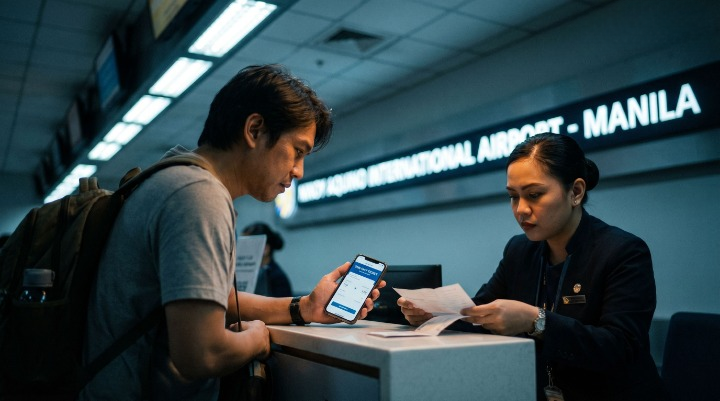
The typical experience goes like this: you approach the counter with your one-way ticket to Manila. The agent scans your passport, notes the destination, and asks for your return or onward booking. If you produce it immediately, the conversation ends in 45 seconds. If you don't, you're standing there with the line behind you growing, trying to solve a documentation problem you didn't know you had.
Airlines that regularly enforce this on Philippine-bound flights:
Cebu Pacific is the most consistent enforcer, across its entire network. AirAsia enforces it variably — more reliably on routes from Singapore and Kuala Lumpur than on others. Philippine Airlines (PAL) enforces it less systematically on international routes, but check-in agents at some stations still ask. Emirates, Qatar Airways, and other long-haul carriers connecting to Philippine destinations have enforced it when their check-in system flags the destination, though this is less predictable than with the budget carriers.
What Counts as Valid Proof
The good news is that "valid proof" is interpreted reasonably broadly. You don't need a return ticket specifically to the country you departed from.
A confirmed return flight is the cleanest option — same passenger name, flight number, date, and booking reference visible on the document. A booking confirmation email or PDF printout is fine; it doesn't need to be a paper ticket.
An onward flight to a third country works equally well. If you're flying into Manila and then plan to fly onward to Japan, Vietnam, or elsewhere, your Manila–Tokyo or Manila–Ho Chi Minh City booking satisfies the requirement. The logic is the same: you have a documented plan to leave.
A ferry or bus booking to another country is technically acceptable under the rules, though in practice the level of enforcement varies. A confirmed Batanes-to-Taiwan ferry booking is less likely to satisfy a skeptical check-in agent than a confirmed flight. If you're using overland or sea transport as your exit plan, having a flight reservation as backup is worth considering.
A verifiable temporary flight reservation — one with a real PNR in the airline's reservation system — is widely accepted, because it passes the same check that a purchased ticket would. The reservation exists in the database; anyone querying it will see a confirmed booking under your name. The distinction between a real temporary reservation and a paid ticket is invisible to the verification system, which is why verifiable reservations work where screenshot PDFs do not.
What doesn't work: a screenshot of flight search results, a price alert confirmation, an unofficial PDF with a booking reference that doesn't query correctly, or a verbal description of your plans.
The NAIA Immigration Experience
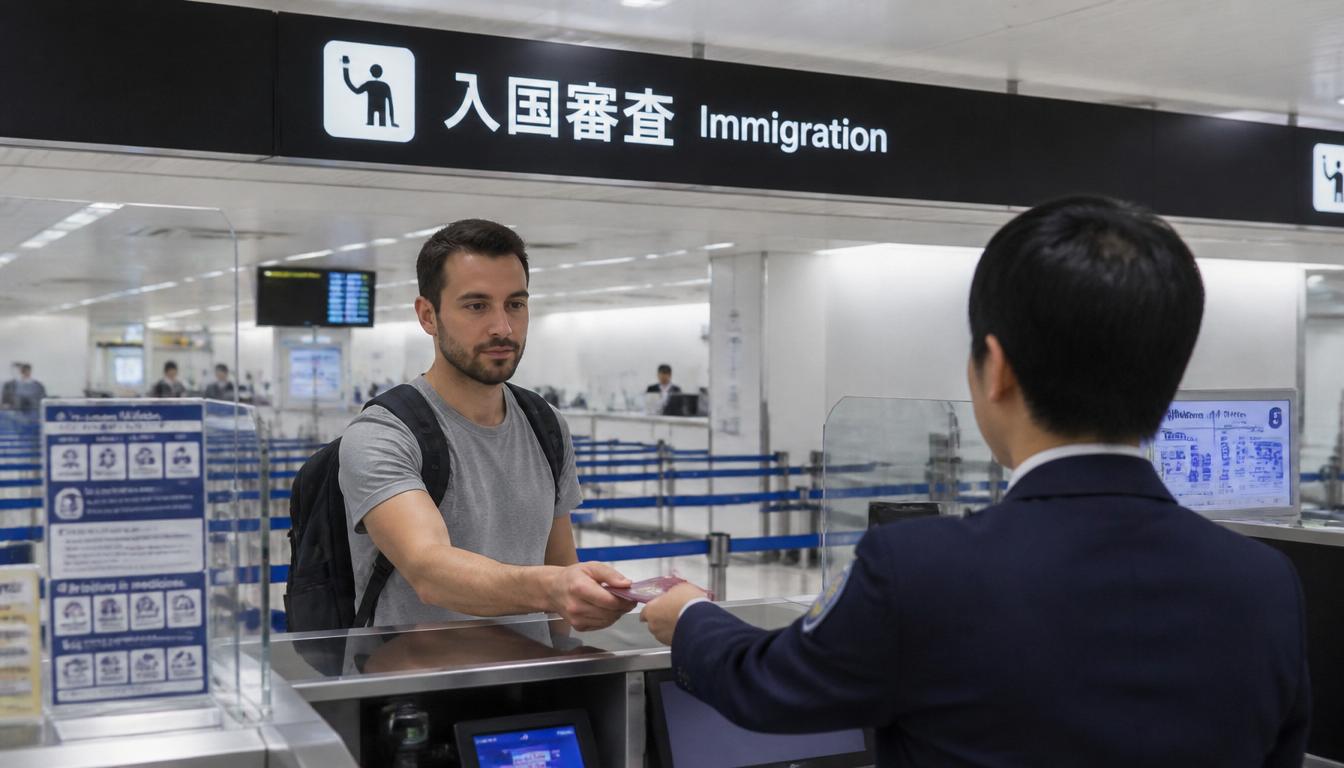
For travelers who make it through check-in without issue — or who arrive from countries where the airline didn't ask — there's still the immigration desk at NAIA.
Manila's international terminals, particularly Terminal 1 and Terminal 3, have a well-earned reputation for thorough questioning. Immigration officers here are more likely than their counterparts at many Southeast Asian airports to ask where you're staying, how long you plan to be in the country, what you'll be doing, and whether you have a return or onward booking. They may ask to see the confirmation on your phone.
The atmosphere at NAIA immigration is not hostile — the officers are doing their jobs — but the questioning can feel more formal than travelers used to Suvarnabhumi or Changi expect. Having your documentation organized and accessible before you reach the desk reduces stress considerably.
If an immigration officer determines that your answers are inconsistent or your documentation is insufficient, they can refer you to the Bureau of Immigration's secondary inspection area. This doesn't automatically mean you'll be denied — most cases are resolved after additional questioning — but it significantly extends your arrival process and can, in serious cases, result in an order to appear before the Board of Commissioners.
For the vast majority of legitimate tourists, none of this applies. Arrive with a plausible itinerary, a place to stay, and an onward booking, and the desk interaction takes two minutes.
The Specific Problem with One-Way Tickets
One-way tickets to the Philippines trigger scrutiny for a reason beyond just the documentation requirement. The Philippines has a higher-than-average rate of visa overstays relative to some other Southeast Asian destinations, and immigration policy reflects that history. Airlines know it; check-in agents know it; immigration officers know it.
A one-way ticket from, say, Dubai to Manila on Cebu Pacific, held by a passport from a country with an elevated overstay rate, will get more attention than a round-trip ticket from the same passport. This isn't personal — it's actuarial.
Digital nomads, long-term travelers, and backpackers who genuinely don't have fixed return plans frequently use the Philippines as a base precisely because of its relative affordability and the English-language environment. These travelers are legitimate tourists who simply don't operate on round-trip itineraries. The practical solution that works consistently — both at check-in counters and at NAIA immigration — is a verifiable onward booking, even if that booking is to a destination they haven't fully planned.
A temporary flight reservation for a Manila-to-Singapore or Manila-to-Bangkok flight dated two or three weeks out, held in a real reservation system with a queryable PNR, satisfies the requirement and survives any verification check the airline or immigration officer might run.
Common Scenarios and What to Do
"I'm flying Cebu Pacific from Singapore to Manila tomorrow on a one-way ticket."
Generate a verifiable onward reservation tonight. The window matters — check-in for a morning flight means the counter opens at 4 or 5 a.m., and you need the reservation active at that moment. A temporary reservation with 48-hour validity issued the evening before will still be live when the agent queries it. Choose a route that makes geographic sense — Manila to Singapore, Manila to Hong Kong, Manila to Kuala Lumpur are all logical exits and raise no questions.
"I booked a return flight but I'm not sure I'll use it — do I still need to show it?"
Yes, and in this case you're already covered. Present the return booking at check-in and at immigration if asked. Whether you actually use the return leg later is your business; the documentation requirement is satisfied.
"I'm flying AirAsia from Kuala Lumpur. Will they definitely ask?"
AirAsia's enforcement is less uniform than Cebu Pacific's, but it happens enough that the risk of not having documentation isn't worth taking. The cost of a temporary reservation is negligible relative to the cost of being denied boarding and having to sort it out at the airport. If you want to understand the full denied boarding scenario, see what actually happens when airlines refuse boarding without a return ticket.
"I arrived without onward proof and got through. Why do others get stopped?"
Enforcement is genuinely inconsistent. Nationality, travel history, the specific check-in agent, the departure airport, the time of day — all of these affect whether you're asked. The inconsistency is exactly what makes people underestimate the risk. The travelers who don't get asked at all are not evidence that the requirement doesn't exist; they're evidence that enforcement varies.
A Note on Extending Your Stay Inside the Philippines
If you've arrived and want to stay longer than your initial 30-day admission, the Bureau of Immigration offices in Manila, Cebu, and other cities process extensions. The extension process is procedurally straightforward, though the offices can be crowded during peak periods.
For travelers who extend their stay and then want to leave on their original onward booking, one thing worth checking: if you used a temporary reservation as your entry documentation, that reservation will have expired long before you actually depart. You'll need a confirmed, paid ticket for your actual exit — or a fresh reservation if you're using proof of onward travel for a visa application for your next destination. These are two different use cases, and the temporary reservation serves the first (entry documentation) but not the second (actually flying out).
Frequently Asked Questions
Does the Philippines always require a return or onward ticket?
Formally, yes — it's part of the standard tourist entry conditions. In practice, enforcement at NAIA varies by officer. At the airline check-in counter, enforcement is more consistent, particularly with Cebu Pacific and AirAsia.
Can I show a one-way ticket out of the Philippines to any country?
Yes. The requirement is that you have a confirmed departure from the Philippines, not a return to any specific origin country. A flight to Japan, Singapore, or anywhere else satisfies it.
What if I genuinely don't know when I'm leaving?
A temporary flight reservation for a date a few weeks out is the standard solution. It gives you documented flexibility without locking in an expensive non-refundable ticket you may not use.
Will a bus or ferry booking work?
Technically yes, but in practice the reliability varies. A ferry from Batanes to Taiwan is a real exit; an overland crossing is harder to document convincingly at a check-in counter. A flight reservation is the cleanest documentation for airline check-in purposes.
Can immigration at NAIA deny entry even with a valid onward booking?
Technically yes — immigration officers have discretion. In practice, arriving with a plausible itinerary, a place to stay, and a confirmed onward booking means you are very unlikely to face problems. The secondary inspection cases that make forum threads usually involve travelers with other complicating factors: previous overstays, inconsistent answers, insufficient funds for their stated stay.
How do I verify that my reservation is actually queryable before I fly?
Most airline "manage booking" portals allow you to enter a PNR and last name to retrieve a reservation. If your booking shows up there — with your name, route, and dates — it's a real record that any check-in agent or immigration officer querying the same system will see. If it doesn't show up, you don't have a verifiable reservation regardless of what the PDF looks like. Our guide to how verifiable reservations work explains this in full technical detail.
If you're flying into the Philippines in the next 48 hours on a one-way ticket, a verifiable flight reservation gives you the documentation Cebu Pacific and NAIA need — with a real PNR you can check yourself before you leave for the airport.