
Proof of Onward Travel: The Complete 2026 Guide
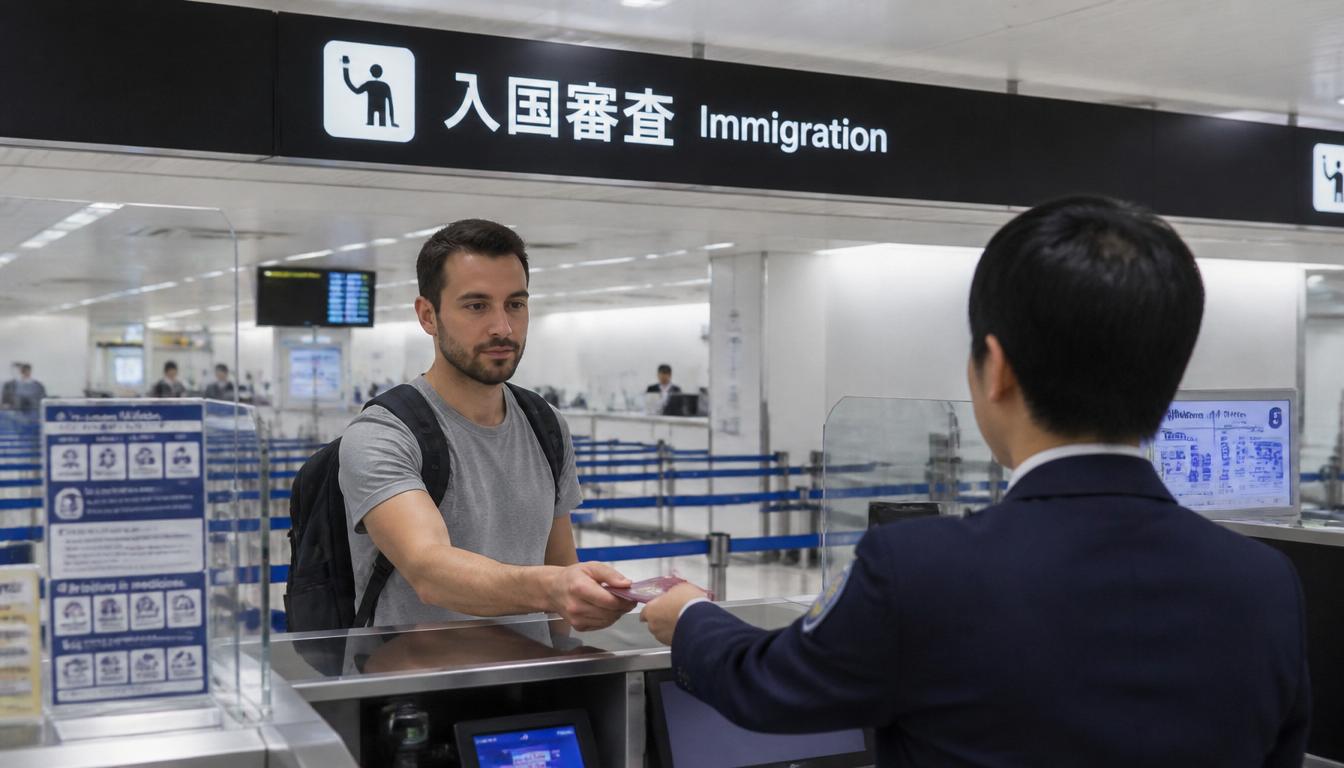
Every few seconds, somewhere in the world, a check-in agent asks a traveler the same question: "Where are you flying after this?" A one-way ticket comes up on the screen, the agent pauses, and a trip that was supposed to begin in ten minutes suddenly depends on a document the traveler doesn't have.
That document is proof of onward travel. It is one of the most misunderstood requirements in international travel — people confuse it with a return ticket, assume a screenshot will do, or discover it exists only when they're standing at the counter. This guide explains exactly what it is, who has to show it, which countries enforce it, what counts as valid proof, and how to satisfy the requirement without gambling on a non-refundable ticket.
Short answer: Proof of onward travel is evidence that you intend to leave a country before your permitted stay ends. Airlines check it at the gate because they are fined — and forced to fly you home — if immigration turns you away. You can satisfy it with a paid ticket, an onward flight to a third country, or a verifiable flight reservation that holds a real PNR in an airline's system, without buying a full ticket you may never use.
What is proof of onward travel?
Proof of onward travel — also called proof of exit, an onward ticket, or ongoing travel — is documentation showing that you have a plan to leave the country you're entering before your legal stay expires. It answers the single question airlines and border officers care about: will this person leave on time, and can they?
It is not the same as a return ticket, even though a return ticket satisfies it. The distinction matters:
Return ticket — a flight back to your country of origin. Always accepted, but not always what's required.
Onward ticket — a flight to any third country. On a multi-country trip, a Bangkok-to-Hanoi flight satisfies Thailand's requirement just as well as a flight home.
Round-trip — entry and exit on the same booking. The strongest form, but the most expensive and least flexible.
The requirement is about the exit, not the destination. Any confirmed departure from the country within your permitted stay does the job.
Why airlines and immigration actually require it
Understanding the "why" explains everything about how this rule is enforced — and why it usually surfaces at the airport in your departure city, not at your destination.
The airline's problem: carrier liability. Under international rules, if an airline flies you somewhere and immigration refuses you entry, the airline is responsible. The carrier must fly you back at its own expense, and most countries also fine the airline for delivering an inadmissible passenger (an "INAD"). Those fines commonly run from roughly $1,000 to $5,000 per passenger — higher in some jurisdictions — on top of repatriation, detention, meals, and escort costs. Carriers that repeatedly deliver inadmissible passengers face far larger annual penalties. From the airline's point of view, letting you board without proof of exit is a financial risk it has every incentive to avoid.
How the check happens: IATA Timatic. Nearly every airline runs your route through Timatic, IATA's global database of entry rules for every country and transit point. If Timatic shows that proof of onward travel is mandatory for your nationality and destination and you can't produce it, the system can block your boarding pass from being issued. This is why the requirement appears at check-in, long before you reach the destination's immigration desk.
Immigration's problem: overstays. Border officers use onward travel as a proxy for intent. A confirmed way out signals that you plan to comply with your visa or visa-free terms. No exit plan invites harder questions about funds, purpose, and how long you really intend to stay.
The practical takeaway: the check-in counter — not the arrival hall — is where most travelers actually hit this requirement. For the full picture, see our guide to what happens when you're denied boarding without a return ticket.
Who needs proof of onward travel?
One-way travelers. The clearest case. A one-way ticket into a country that enforces the rule is exactly what triggers the question at check-in.
Visa-waiver and visa-free tourists. Programs like the US Visa Waiver Program (ESTA), Japan's visa waiver, and dozens of visa-free entries include an implicit or explicit onward-travel condition.
Visa applicants. Many consulates — the entire Schengen Area, the UK, and others — require a flight reservation as part of the application itself. Here the check happens at the visa stage, on paper, not at the airport.
Digital nomads and long-term travelers. Open-ended plans and repeat entries draw more scrutiny; a clean exit booking is part of presenting a coherent itinerary.
Backpackers on flexible routes. If you genuinely don't know your next move yet, you still need a confirmed exit to board and to enter.
Travelers holding a confirmed return on the same booking rarely get asked. The requirement bites hardest for one-way and open-ended travel.
Which countries require proof of onward travel — and how strictly
Enforcement varies by country and, crucially, by where the check happens: some at airline check-in, some at arrival immigration, some only at the visa-application stage. The matrix below maps the destinations travelers ask about most. Tap any country for its detailed requirements.
| Destination | Where it's checked | How strict |
|---|---|---|
| Philippines | Airline check-in | Very strict |
| Indonesia (Bali) | Airline check-in | Very strict |
| United States (ESTA/VWP) | Check-in | Strict |
| Thailand | Check-in + arrival | Strict |
| Australia (ETA/eVisitor) | Check-in | Strict |
| Japan | Check-in (waiver) | Moderate–strict |
| Schengen Area | Visa application | Required (documentary) |
| United Kingdom | Visa application + check-in | Required |
| Vietnam | E-visa + check-in | Moderate |
| UAE (Dubai) | Visa + check-in | Moderate |
New Zealand, Costa Rica, Colombia, and Brazil also enforce onward-travel rules, and the list keeps growing as more countries digitize entry. You can browse every destination we cover — including Turkey and others — on the onward ticket by country hub. For deep dives, see our dedicated guides to Thailand, the Philippines, and Japan.
What counts as valid proof — and what doesn't
Accepted:
A fully paid ticket out of the country within your permitted stay.
An onward flight to a third country — it doesn't have to be a flight home.
A verifiable flight reservation with a real, lookup-able PNR held in an airline's reservation system.
In some countries, a confirmed onward bus, train, or ferry ticket — though this varies and is riskier than a flight at airline check-in.
Not accepted:
Screenshots of flight-search results or price alerts — these prove nothing is booked.
Edited or "generated" PDFs with no real PNR. They fail the instant anyone looks up the code, and submitting one to a consulate is document fraud.
Expired or auto-released holds that are no longer live in the system.
An itinerary printed in your name that was never actually reserved.
The single dividing line is verifiability: can the airline or officer type the booking reference into a reservation system and see your name, route, and date? If yes, it works. If no, it's just decoration — and potentially a fraud problem.
How to satisfy the requirement without buying a full ticket
Buying a fully paid, non-refundable ticket you may never fly — just to clear a check-in question or a visa checklist — is expensive and risky. If your plans shift, your visa is delayed, or you're denied, that money is gone.
The purpose-built alternative is a verifiable flight reservation: a real booking held in an airline's system with a genuine PNR, valid for a set window, that you and any officer can independently verify — for a fraction of a ticket's price. It shows a real reservation, which is exactly what the rule asks for. For the mechanics, read how a verifiable flight reservation actually works (and why a screenshot won't).
This is what iReturnTicket provides: a verifiable reservation with a real PNR, delivered by email in minutes, from $9.99 for a one-way and $17.99 for a round-trip. You can confirm it's live on the airline's own site before you travel or submit. If you want the broader background on the category and terminology, our complete dummy ticket guide covers it in depth.
Is using a flight reservation for proof of onward travel legal?
Yes — with one clear line. Holding a real, temporary reservation in an airline's system is a legitimate, everyday part of how bookings work; you are showing a genuine reservation, not claiming to have paid for a ticket. What is illegal is fabricating or altering a document — a fake PDF with an invented booking reference. That's document fraud, and for visa applications it can trigger an immediate refusal, a multi-year ban, and a flag in shared systems such as the Schengen Visa Information System (VIS).
The entire value of a verifiable reservation is that it's real: it holds up under scrutiny precisely because there is nothing fake about it. A convincing PDF with no PNR behind it is the opposite — it looks fine until the moment someone checks, which is the one moment that matters.
How to get proof of onward travel: step by step
1. Confirm the requirement. Check whether your destination requires proof of onward travel and where it's enforced — use the country matrix above, or the relevant country page.
2. Choose your exit route. Decide whether you'll show a return home or an onward flight to a third country. Either satisfies the rule if it's within your permitted stay.
3. Pick the date carefully. The exit must fall inside your visa-free window or your visa's validity. An exit date after your allowed stay defeats the purpose.
4. Get a verifiable reservation. Obtain a reservation with a real PNR rather than buying a non-refundable ticket before your plans (or your visa) are locked in.
5. Verify it yourself. Look the PNR up on the airline's website so you know it's live before you rely on it.
6. Keep it accessible offline. Save the PDF to your phone; don't count on airport Wi-Fi at the counter.
Timing matters: reservations are held for a limited window (often 24–48 hours). Create yours close to when it will actually be checked — at check-in or at your visa appointment — not weeks in advance, or it may lapse before anyone looks.
Frequently asked questions
Is proof of onward travel the same as a return ticket? No. A return ticket is one way to satisfy it, but any confirmed exit — including an onward flight to a third country — also works. The requirement is about leaving on time, not about flying home.
Do airlines really check? Yes. Most carriers run your route through IATA's Timatic database at check-in, and where proof of exit is mandatory, the system can block your boarding pass until you produce it.
Can I show an onward flight to a different country instead of flying home? Yes. A confirmed departure to any third country within your permitted stay satisfies the rule in almost every case.
How long is a flight reservation valid? Typically 24–48 hours for a temporary hold, sometimes longer. Create it close to when it will be checked so it's still live at that moment.
Is it legal? A real, verifiable reservation is legal and legitimate. A forged or edited PDF with no genuine PNR is document fraud and can lead to refusals and bans.
What if I'm already at the airport without proof? A verifiable flight reservation with a real PNR can be issued and emailed within minutes. The agent looks up the PNR and, in most cases, that resolves it inside the check-in window.
Which countries are strictest? The Philippines, Indonesia (Bali), the United States, and New Zealand are among the most consistently enforced at check-in. The Schengen Area and the UK require it at the visa-application stage instead.
Written by the iReturnTicket Travel Team — frequent flyers who have personally navigated one-way check-ins, border crossings, and visa document requirements across dozens of countries.
Flying one-way or preparing a visa application? A verifiable flight reservation with a real PNR gives you the exact document airlines and consulates ask for — and you can confirm it's live in the airline's system before you leave home.