Thailand Onward Ticket Requirements for One-Way Travelers (2026)
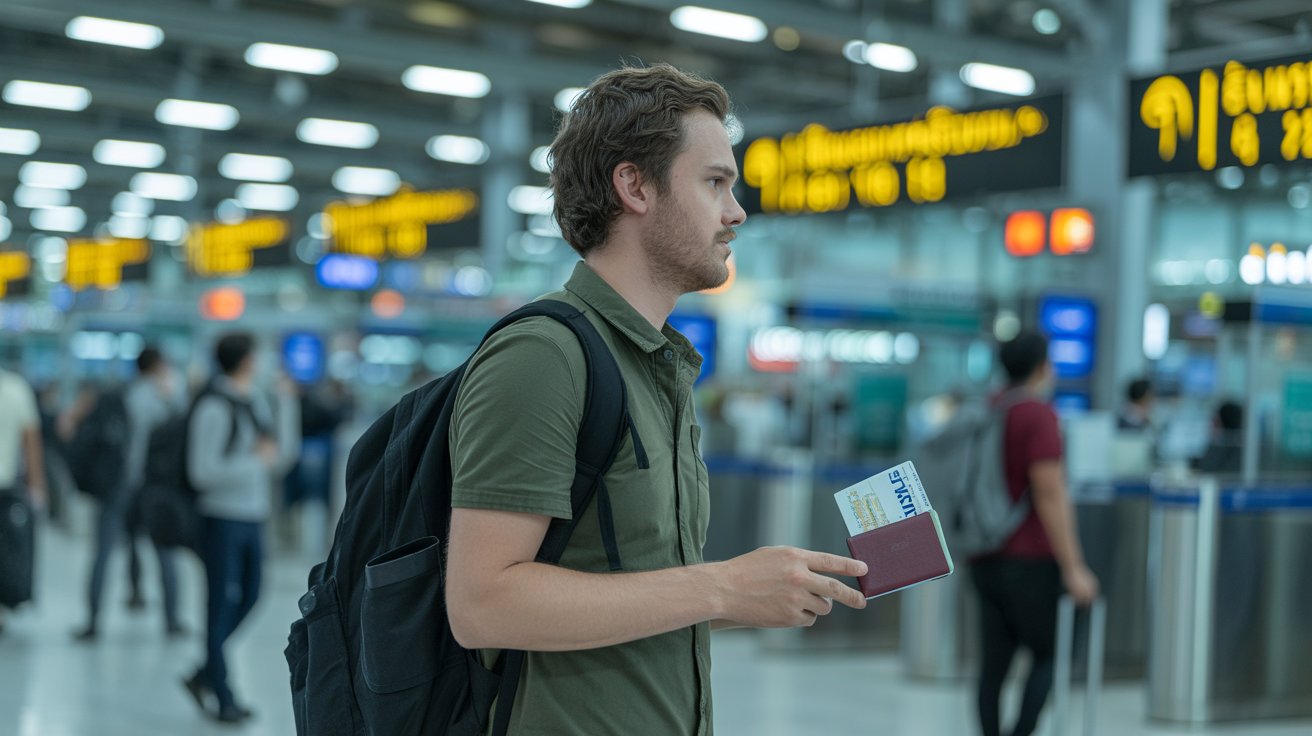
Thailand has a way of surprising travelers. Not at immigration — most people walk through Suvarnabhumi without a second glance — but at the check-in counter of whatever airline brought them there. That's where the onward ticket question tends to surface, usually at an inconvenient hour, usually when there's no good time to solve it.
The requirement itself isn't complicated. What makes it confusing is the inconsistency: some travelers get asked every time, others never. Some airlines enforce it religiously, others wave you through. Understanding which situations actually trigger enforcement — and what to do when they do — is what this guide covers.
What Thailand Actually Requires
Thailand's immigration rules require tourists entering on a visa exemption or visa on arrival to demonstrate they have a plan to leave before their permitted stay expires. This isn't a new rule or an obscure technicality — it's been part of Thai immigration policy for years, and it's referenced directly in the entry conditions printed on most visa exemption stamps.
The permitted stay varies by nationality and entry type:
Visa exemption entries — most Western, East Asian, and many Southeast Asian passport holders receive 30 days on arrival, extendable once at an immigration office. Some nationalities receive 60 days following bilateral agreements updated in recent years.
Visa on arrival — available to nationalities not covered by visa exemption agreements, typically 15 days, with limited extension options.
Tourist visas (TR) — obtained in advance from a Thai consulate, valid for 60 days with one possible extension. Holders of pre-arranged tourist visas face less scrutiny on onward travel at the border, since the visa process itself involves consular review.
The onward travel requirement applies most directly to the first two categories — visa exemption and visa on arrival travelers.
Where the Requirement Actually Gets Enforced
There's a gap between what the rules say and what happens in practice, and understanding that gap is important.
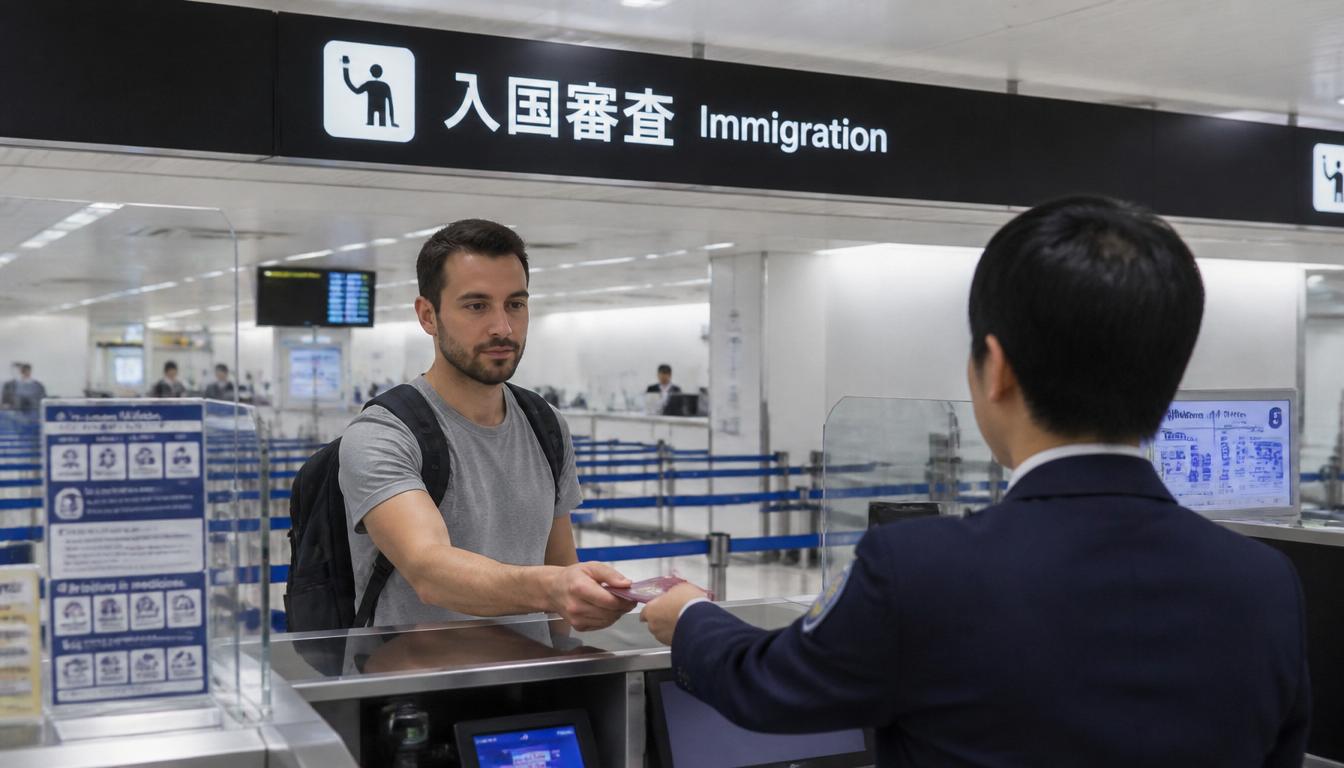
At Thai immigration (Suvarnabhumi, Don Mueang, Phuket, Chiang Mai): Officers have discretion. In practice, most visa exemption travelers walk through without being asked for onward travel proof. The exceptions tend to be travelers with passport histories that raise questions — multiple recent Thailand entries, long stays approaching the maximum each time, or passports from countries with elevated overstay rates. If an officer asks and you don't have documentation, the conversation can range from a brief explanation to secondary inspection. In rare cases, entry can be refused.
At the check-in counter (departure country): This is where enforcement is far more consistent. Airlines use Timatic — IATA's global documentation database — to flag whether passengers need onward travel proof for their destination. For Thailand-bound passengers on visa exemption, the flag is active, and trained staff at many carriers act on it.
The airlines most consistently associated with enforcement on Thailand routes include AirAsia (particularly from KLIA2 and Singapore), Scoot, Cebu Pacific on cross-regional routes, and to a lesser extent Bangkok Airways on regional connections. Legacy carriers are less predictable but not immune.
At land borders (Aranyaprathet, Nong Khai, Mae Sai, Sadao): Enforcement at land crossings is historically more relaxed than at airports, though this varies by crossing and has tightened at some points in recent years. Travelers doing "border runs" — exiting to a neighboring country briefly to reset their visa exemption — are particularly scrutinized at land borders, where officers are familiar with the pattern.
The Repeat Entry Problem
Thailand's visa exemption allows most nationalities to enter and stay for 30 days, exit, and re-enter. For a long time, travelers could repeat this cycle — known informally as "border runs" — indefinitely. Thai immigration policy has moved to limit this over the years.
Currently, immigration officers have discretion to deny entry to travelers who appear to be using repeated short-stay entries as a substitute for a proper long-term visa. There's no published hard limit on the number of exemption entries, but travelers with many recent stamps — particularly land border entries — are more likely to be questioned in detail.
Onward travel documentation doesn't solve this problem directly, but it's part of the picture. A traveler who can show a confirmed flight out of Thailand in two weeks looks different to an immigration officer than one who arrives with no documented exit plan and a passport full of 30-day stamps.
What Counts as Valid Proof
The standard for valid onward travel proof in Thailand is the same as elsewhere: a confirmed booking showing you will leave before your permitted stay expires.
A return flight is the cleanest option — a booking confirmation with your name, flight number, date, and reference code. It doesn't need to be to your home country; any confirmed outbound flight from Thailand satisfies the requirement.
An onward flight to a third country works equally well. Bangkok to Singapore, Bangkok to Bali, Bangkok to anywhere — what matters is a confirmed departure from Thailand, not the specific destination.
A confirmed bus or train booking crossing an international border — such as the Bangkok to Kuala Lumpur overnight bus or the train to Butterworth — is technically acceptable, though less universally recognized at airline check-in counters than a flight. If overland is your actual exit plan, having a flight reservation as backup documentation is worth considering.
A verifiable temporary flight reservation — one held in a real airline reservation system with a queryable PNR — passes the same verification check as a purchased ticket in most situations. The reservation exists as a confirmed record in the airline's database; anyone querying the PNR will see a confirmed booking under your name. In most cases, this satisfies both airline check-in requirements and Thai immigration if asked, though as with any travel document, the final decision rests with the officer or agent in front of you. For detail on how this works technically, see our guide on how verifiable flight reservations actually work.
What doesn't work: a screenshot of available flights, a price search result, an incomplete booking with no reference number, or a verbal statement of intent.
Common Traveler Scenarios
The first-time Thailand visitor on a one-way ticket
You booked a one-way flight because you weren't sure how long you'd stay. At check-in in your departure city, the airline asks for your onward booking. This is the most common scenario. The fix is straightforward — a confirmed exit booking, whether a return flight, an onward flight, or a verifiable temporary reservation. The time to sort this is before you leave for the airport.
The digital nomad on their third Thailand entry this year
Three entries, each 30 days, exit and re-enter. Thai immigration is familiar with this pattern. The scrutiny you receive at the border depends partly on your passport, partly on which officer you get, and partly on how your overall travel history reads. Having a clear onward booking — even if you don't intend to use it — is part of presenting a coherent travel story. It doesn't guarantee smooth entry, but its absence makes a difficult conversation more likely.
The traveler with a return flight already booked
If you already have a return or onward flight booked, you're covered. Show it at check-in and at immigration if asked. Whether you ultimately use it is irrelevant to the documentation requirement — the confirmed booking is what matters.
The traveler extending their stay inside Thailand
You entered on a 30-day exemption, went to an immigration office, and extended for another 30 days. When you eventually leave, you need an actual paid ticket — your extension document doesn't change your exit requirements. If you used a temporary reservation as entry documentation, it will have expired long before your departure date. Your real departure needs a confirmed paid booking.
The overland traveler crossing into neighboring countries
Going from Thailand into Cambodia, Laos, Myanmar, or Malaysia by land and coming back is a legitimate travel pattern, but it's one that Thai immigration scrutinizes more closely than it did previously. Documentation of your onward plans — including proof that your re-entry stays are genuinely temporary — helps your case at the border.
Airline-Specific Notes for Thailand Routes
Different airlines handle this differently, and knowing the landscape helps.
AirAsia is the most consistently reported enforcer on Thailand routes, particularly from KLIA2 and Changi. Its check-in system flags the requirement and staff apply it. Note that completing mobile check-in doesn't bypass the document check — it still happens at bag drop. A detailed breakdown of AirAsia's specific enforcement patterns is in our AirAsia Thailand onward ticket guide.
Scoot (Singapore Airlines budget subsidiary) enforces this on Thai routes with enough frequency that travelers report it regularly.
Bangkok Airways operates extensively on regional routes connecting to Thai destinations. Its enforcement is less systematic than budget carriers but present on some routes.
Thai Airways and Thai Smile are generally less aggressive on documentation checks, but agents at some international stations do ask.
Long-haul carriers (Emirates, Qatar Airways, Cathay Pacific, etc.) connecting through to Thailand are variable — agents at some outstations, particularly cities with higher overstay rates for Thai destinations, enforce more consistently than others.
Practical Checklist Before Flying to Thailand
Before you leave for the airport on a Thailand-bound flight:
Passport validity — Thailand requires at least 30 days of passport validity beyond your intended stay for visa exemption entry. Some carriers require 6 months.
Entry type clarity — know whether you're entering on visa exemption, visa on arrival, or a pre-arranged visa. The documentation requirements differ.
Onward booking — have a confirmed exit booking accessible on your phone before you reach check-in. A PDF downloaded offline is safer than relying on airport Wi-Fi to retrieve it.
Travel history awareness — if you've made multiple recent entries to Thailand, be prepared for more questions at immigration. A clear narrative about your travel purpose helps.
Extension plan — if you plan to extend your stay at an immigration office, know the process before you arrive. Extensions require a fee, a TM.7 form, and a passport photo, and offices can be busy.
Frequently Asked Questions
Does Thailand require a return ticket for entry? Officially yes — the visa exemption entry conditions include proof of onward travel. In practice, enforcement at Thai immigration varies considerably by officer, nationality, and travel history. Enforcement at airline check-in counters before departure is more consistent.
Which nationalities need onward travel proof for Thailand? The requirement applies to visa exemption and visa on arrival entries across most nationalities. Travelers with pre-arranged tourist visas face less check-in scrutiny, though the underlying entry condition still technically applies.
Can I extend my Thailand stay without an onward ticket? The extension process itself doesn't require an onward ticket — it's handled at an immigration office with a fee and paperwork. But having a clear exit date and documentation makes the process smoother and reduces questions.
How many times can I enter Thailand on a visa exemption? There's no published hard limit, but immigration officers have discretion to deny entry to travelers appearing to use repeated short-stay entries as a long-term residence strategy. Land border re-entries face more scrutiny than air entries.
Does Thailand check onward travel at land borders? Less consistently than at airports, but yes — and enforcement at some crossings has tightened in recent years, particularly for travelers doing frequent border runs.
What if I don't have an onward ticket when the airline asks? Your options depend on how much time you have before check-in closes. A verifiable temporary flight reservation with a real PNR can typically be generated and delivered to your email in a few minutes, and verified by the agent on the spot. See our guide on what actually happens when airlines ask for onward documentation for the full scenario.
Is a bus ticket from Bangkok to Malaysia accepted? Technically yes, but airline check-in agents don't always accept overland transport bookings as readily as flight confirmations. A flight reservation is the safer documentation choice for check-in purposes.
Traveling to Thailand on a one-way ticket? A verifiable flight reservation with a real PNR gives you the documentation airlines and Thai immigration may ask for — and you can confirm it's active in the system before you leave home.